Unsettled U.S.-Israel Relations in an Unsettled Middle East/other news
 | Unsettled U.S.-Israel Relations in an Unsettled Middle East by Richard Baehr
inFocus Quarterly
Winter 2010 |
|
These new challenges to Israel occur at a time when its relationship with the United States, its principal ally for over 40 years, is perhaps at its lowest point, in large part due to President Obama's singular, if not obsessive, focus on Israeli settlement activity in the West Bank throughout his two years in office. Though on the mend thanks to the 2010 mid-term election results and the president's upcoming 2012 campaign, in which he hopes to secure a high percentage of the Jewish vote as well as raise campaign cash from the community, U.S.-Israeli relations remain strained under a president more interested in outreach to America's enemies than her longtime friends.| The United States and Israel are facing some very troubling and unsettling developments in the three largest Muslim countries in the Middle East. In Turkey, the power and influence of Islamists opposed to the very existence of Israel is on the rise, and the historic alliance of the United States with this "moderate" Muslim nation is at risk of fraying. Similarly, Egypt's recent uprising brought down President Hosni Mubarak's 30-year regime, and there is reason to believe the next government will be far less friendly toward both the United States and Israel. Moreover, Iran, an unremittingly hostile nation since the triumph of the mullahs in 1979, is poised to become a new member of the nuclear weapons club, despite the passage of last year's sanctions and various acts of sabotage directed at its nuclear program, such as the Stuxnet virus. All this is occurring as Israel faces the prospect of much more serious military threats and pressure from Hezbollah in Lebanon and Hamas in the Gaza Strip—two of Iran's proxy militaries. Strained Relations President Obama came into office on January 20, 2009 set on turning back the policies adopted by his predecessor. On June 4 of that year, the president conducted his highly anticipated Muslim outreach speech from Cairo, Egypt, titled, "A New Beginning." In that speech, the president outlined his plans to improve America's relations with the Muslim world with a policy of outreach and dialogue toward countries historically hostile to the U.S. He also stepped back from the Bush doctrine of advancing a democracy agenda in the Arab world, telling his audience in Cairo that the path to greater freedom was not a straight line, and in no case would be achieved with American military operations. The American relationship with Israel, generally warm since the latter's creation in 1948 and strengthened under President Bush, was another arena President Obama planned to alter upon entering office. His logic appeared to follow that of Professors Stephen Walt and John Mearsheimer's in their book The Israel Lobby, which argues that the U.S. must distance itself from Israel in order to improve its strategic partnership with the growing Muslim world. Obama sought to create that space between Israel and the U.S. by placing American pressure on Israel to freeze settlement activity in the West Bank and Jerusalem, including natural growth expansion. Did the administration believe Israeli Prime Minister Benjamin Netanyahu would quickly succumb to the American pressure and its logic—that such a freeze was necessary to get Palestinians back to peace talks with Israel, from which a peace deal, ever elusive despite many good intentions for 60 years, was supposedly imminent? Or was the administration's pressure more cynical—designed to weaken Netanyahu's coalition, potentially forcing the government to either expand, or collapse, in order to produce a more malleable negotiating partner for the Palestinians and the Americans who were doing much of their bidding? Whatever the goal, a total settlement freeze had never previously been a U.S. precondition for Israeli-Palestinian talks. But when it became one, the Palestinians, unwilling to appear more pro-Israel than the American president, quickly became obstinate about returning to peace talks unless a freeze was secured. It is no wonder that few Israelis, as public surveys illustrate, believe the president is sympathetic to Israel and a much greater number believe he favors the Palestinians. Lending credence to their theory, the president has visited over 30 countries in two years, several in the Middle East, none of them Israel. Policy Priorities As administration officials chastised Israel publicly over settlement activity, the large Democratic majorities in the House and Senate were almost uniformly quiet, choosing not to pick a fight with a president of their own party over his policy towards Israel when a higher priority item—the passage of health care reform—demanded party unity. In general, the administration and its allies in Congress placed a laser-like focus on the liberal domestic agenda, rather than on foreign affairs. Once the health care reform bill passed, a few prominent Democrats, including New York Senator Chuck Schumer, were free to condemn the one-sided pressure from the White House on Israel. In the first days of the 112th Congress, a bipartisan letter was sent to the president calling for his use of a Security Council veto if UN members sought to pass a resolution condemning Israeli settlement activity as illegal under international law. Fortunately, this is a sign that a renewed dynamic is at work in Congress—the return of the traditionally strong bipartisan support for the U.S.-Israel relationship. The unwillingness of the Democratic members in Congress to take on the president in his first two years in office was also seen when it came to Iran and its nuclear program. Democrats bottled up a sanctions bill in a House Committee run by California Congressman Howard Berman for the better part of a year in order to allow the president and his administration to engage the Iranian regime—of course, to no avail. The passivity in the face of the Iranian threat—an urgent threat given the thousands of spinning centrifuges in Iran—was most evident during the weeks of street protests that followed the almost certainly stolen presidential election in Iran in June 2009. The administration stayed on the sidelines, offering no moral or other support to the hundreds of thousands of demonstrators who took to the street to challenge the regime. This timidity appeared to be a case of not seeking to offend the regime, with which the administration was still supposedly "engaging." While the failed engagement with Iran was underway, the administration also tried a soft touch approach with Syria, attempting to wean it away from Iran's orbit. The two efforts, neither of which had any real prospects for success, undoubtedly undercut each other and strengthened the perspective in both countries that the U.S. would not seriously challenge their regimes. When the popular uprising in the streets of Tunisia in January 2011 spread to Egypt, the administration seemed more eager to get on the side of the protestors, while not immediately abandoning Egyptian President Hosni Mubarak's government, given the risks associated with what could follow if his government fell. The American reaction to the events in Egypt mirrored its actions with the Shah of Iran in 1978-1979, when the Western-backed leader faced a serious challenge to his regime. In that case, President Carter was seen as having assisted, probably unwittingly, in undermining the Shah. The half-hearted support for dictators friendly to the United States and at peace with Israel (Iran in 1979, Egypt in 2011), contrasts with America's standoffish approach to the events in Iran in 2009, when regime change would have been in America's interest, and greatly reduced the threat of an Iranian nuclear program for Israel other American allies in the Middle East, and even countries in Western Europe. Increased Regional Hostilities With Hosni Mubarak out of the picture the new government in Egypt will have a choice of maintaining or abrogating the peace treaty with Israel signed in 1979. Egypt, under Mubarak, has put a lid on the political involvement of the Islamist Muslim Brotherhood and has tightly controlled the border with Gaza—a territory run by Hamas, a Brotherhood offshoot, since 2007. With the Mubarak regime's demise, the Muslim Brotherhood may be the most organized political group to fill a leadership role in the political vacuum that will follow. A reversion to the pre-1979 relationship between Egypt and Israel would have enormous consequences for the Jewish state. Between 1948 and 1979, Israel fought four wars with Egypt. When Egyptian President Anwar Sadat made his dramatic flight to Israel, beginning a process that would lead to a peace agreement sealed 16 months later at Camp David, Egypt was removed as a front line nation from land wars with Israel. With Egypt, the Arab world's largest nation with its most well equipped army, off the battlefield, the prospect of a multi-front war between Israel and its Arab neighbors ended. Since the peace agreement, Egypt's army has been strengthened enormously from America's yearly gift of nearly $1.3 billion to be used for military purposes—Egypt's reward for making peace. That the Muslim Brotherhood may come to control this military might is a frightening prospect for both the U.S. and Israel. Putting aside Egypt's potential threat, Israel today faces the threat of tens of thousands of rockets and missiles that Iran has smuggled into the hands of its client terror army, Hezbollah, in Lebanon. The insertion of a multi-national United Nations force into south Lebanon following the end of the 2006 war between Israel and Hezbollah has had no effect in interdicting the re-supply of Iranian weaponry shipped through Syria into Lebanon. Three years after hostilities ended, Israeli, UN, and Hezbollah officials agree that the terrorist group is now better equipped than before the war. According to the most recent estimates, Hezbollah has 40,000 rockets and is training its forces to use anti-aircraft missiles and ground-to-ground missiles capable of hitting Tel Aviv. Moreover, with the recent collapse of the Western-backed Hariri government in Beirut and its replacement by a Hezbollah selected puppet as prime minister, Hezbollah's role has shifted from "resistance army" in the south, to the de facto leadership with power over the country. A similar situation has played out in Gaza, run by Iranian ally Hamas since it seized power from the Palestinian Authority in a one-week military coup in 2007. Since the takeover, Hamas has been stockpiling weaponry smuggled into Gaza from tunnels dug under the border between Egypt and the Strip. Rocket firing by Hamas and its even more radical allies into Israeli towns both near Gaza and further removed finally forced Israel's hand and led to an Israeli military intervention into Gaza in December 2008. While Israel's operation improved the situation, it did not solve it. Since the end of Operation Cast Lead in January 2009, more than 275 rockets and 178 mortar shells have been fired into Israel. Meanwhile, Turkey, led by the Islamist Justice and Development Party (AKP) since 2002, has attempted to become an international power by siding itself with Iran and Syria in recent years. The government under Prime Minister Recep Tayyip Erdogan has led and encouraged unrestrained Israel bashing by government officials, the media, and religious leaders over the last year or two, especially after the face-off between IDF forces and radicals aboard the Turkish Mavi Marmara "freedom" flotilla headed with supplies for Gaza on May 31, 2010. The fighting aboard the ship left nine Turks dead after Israel Defense Forces (IDF) personnel who boarded the ship were first attacked by knives, guns, and iron bars. With Prime Minister Erdogan, to this day, demanding an apology for the events that transpired on May 31, tensions between the two countries, once close military allies, remain alarmingly high. The Next Two Years How the Obama administration will react to these heightened tensions in the region remains unclear. One would hope that the stalemate in the Israeli-Palestinian peace negotiations, the failed effort to engage Iran and change its policies, the weakening ties with Turkey, the loss of Lebanon, and the risk of losing Egypt along with the Israeli-Egyptian peace would refocus American efforts towards broader strategic goals. In doing so, America should work closely with Israel, the only country in the region that shares the American values of liberty and democracy. Is it a coincidence that a much stronger anti-Israel hysteria, and a comprehensive BDS (boycott, divestment, sanctions) campaign have exploded in the Middle East and in Western countries under President Obama's watch? Maybe. But it just goes to show that a U.S. president's outstretched hand toward countries and groups historically hostile to the United States, and weak support for historic allies, will not do much in the way of settling the unsettled Middle East. Perhaps it is time for a new plan. Richard Baehr is a fellow at the Jewish Policy Center and political director of The American Thinker. |
|
MEMRI Daily: June 21, 2011 |
| 
| | |
| |
|
| | |
| | The following are reports published today, from MEMRI's Special Dispatch series, the MEMRI TV Project and the Jihad and Terrorism Threat Monitor Project. - Jordanian Daily: The Struggle with Israel Is Existential, Not Territorial
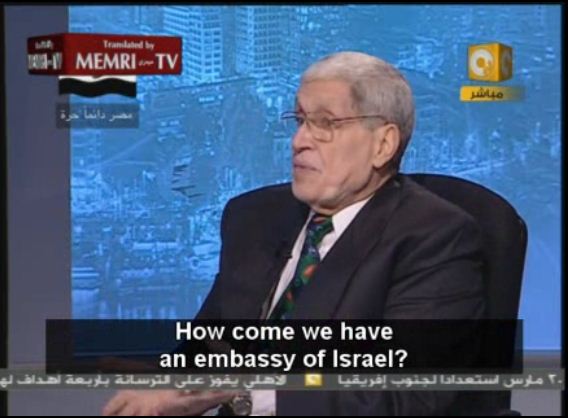
- Former Egyptian Wafd Party Leader No'man Gum'a Calls for Reexamination of Camp David Accords, Normalization of Ties with Iran, Hizbullah, and Hamas
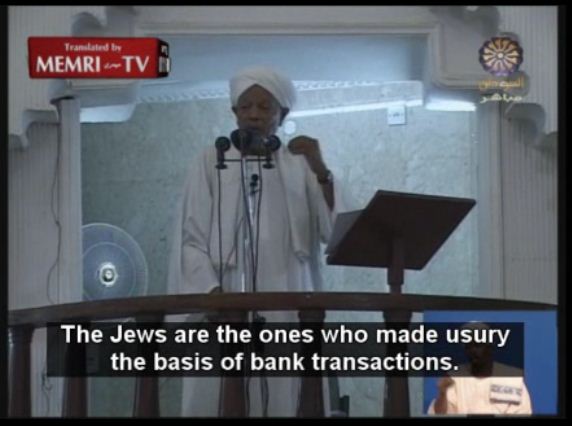
- Sudanese Preacher Sheik Abd Al-Jalil Al-Karouri: The Jews Made Usury the Basis of Banking, 4,000 Jews Were Absent from Work at the WTC on 9/11
- Senior Jaysh Al-Islam Operative: Salafi-Jihadi Groups in Gaza Have 11,000 Members
Special Dispatch No. 3936– Palestinians/Jordan Jordanian Daily: The Struggle with Israel Is Existential, Not Territorial A June 5, 2011 op-ed in the Jordanian daily Al-Dustour marking the 44th "Naksa Day," the anniversary of the outbreak of the 1967 war, claimed that four decades later, it was clearer than ever that the struggle with Israel was existential in nature rather than territorial. The article called on the Arabs to join forces and stand up to the genocidal Zionist enterprise which posed a threat to the entire Arab ummah. Following are excerpts of the article: "On the 44th anniversary of the oppressive Zionist aggression against the [Arab] ummah on June 5, 1967, the repercussions of this tragedy are still clearly evident in the Arab world, in the form of the occupation of all of Palestine, from the [Mediterranean] Sea to the [Jordan] River, [in the occupation] of the Golan and the Shab'a Farms, and in the fact that Sinai remains a demilitarized zone in accordance with the Camp David Accords. "Looking over the reasons that led to the tragedy of June [1967], one finds that [the same reasons] still exist. The Arab states, from the ocean to the Gulf, have not learned the lessons of the Naksa, and have not taken the measures or [invested in] the tools which can [move] them from the chessboard square of failure to the chessboard square of victory. Indeed, the hidden disputes among some of the [Arab] countries remain as they were [then]. What is more, they have multiplied, and the policy of hostility and alienation is worse now than it was in the past. The [state of] helplessness [the Arab countries] have reached over the past four decades is proof of the same." Special Dispatch No. 3935—Egypt/ U.S. and the Arab and Muslim World/Hizbullah/Hamas Former Egyptian Wafd Party Leader No'man Gum'a Calls for Reexamination of Camp David Accords, Normalization of Ties with Iran, Hizbullah, and Hamas Following are excerpts from an interview with No'man Gum'a, former Egyptian Wafd Party leader. The interview aired on ON TV on February 23, 2011: No'man Gum'a: "There is no war between Iran and us. Why should we be hostile to Iran? I'm not saying we should form a coalition with it, but why be hostile to it? How come we have an Embassy of Israel?" MEMRI TV Clip No. 2983 - Sudanese Preacher Sheikh Abd Al-Jalil Al-Karouri: The Jews Made Usury the Basis of Banking, 4,000 Jews Were Absent from Work at the WTC on 9/11 Following are excerpts from a Friday sermon by Sheikh Abd Al-Jalil Al-Karouri, which aired on Sudan TV on June 3, 2011: Abd Al-Jalil Al-Karouri: "The Jews are the ones who made usury the basis of bank transactions. The Westerners adhered to Christianity, which forbade usury. In order to seize capital for building Israel, the Jews established these centers." Special Dispatch No. 3934—Palestinians/Al-Qaeda/Jihad and Terrorism Threat Monitor Senior Jaysh Al-Islam Operative: Salafi-Jihadi Groups in Gaza Have 11,000 Members Note to media and government: For a full copy of this article, send an email with the title of the report in the subject line to media@memri.org. Please include your name, title, and organization in your email. On June 3, 2011, the Egyptian daily Al-Masri Al-Yawm published an interview with Abu Al-Baraa, who presented himself as a senior operative in the Salafi-jihadi movement in Gaza. The paper described him as one of the founders of the Salafi-jihadi group Jaysh Al-Islam, which is affiliated with the global jihad movement and associated with the Gazan Dughmush clan. In the interview, Abu Al-Baraa took pains to glorify himself and his group by creating an aura of secrecy and mystery around the Salafis and their actions. For instance, according to the daily, he played a recording of an Israeli Mossad agent making telephone threats to assassinate him. Claiming to speak on behalf of all the Salafi militias in Gaza, Abu Al-Baraa stated that these groups have some 11,000 members (in contrast to Hamas's claim that they have no more than several hundred). It should be noted that this estimate is not corroborated by any non-Salafi source. Abu Al-Baraa also claimed that there is a body coordinating all the Salafi groups in Gaza; this claim too is uncorroborated. Abu Al-Baraa implied that during periods of escalation in the conflict with Israel, Jaysh Al-Islam is given permission to attack Israeli targets. As for the relations between the Salafi-jihadi groups and Al-Qaeda, Abu Al-Baraa stressed that the Gazan Salafis have ideological ties with Al-Qaeda but no organizational ties, and also emphasized that the Gazan groups focus on the local conflict with Israel, rather than on global jihad. To view this report, you must be a paying member of the Jihad and Terrorism Threat Monitor Project (JTTM). For membership information, send an email to jttmsubs@memri.org with "Membership" in the subject line. |
|
|

IDF soldier works to clear minefields
On Sunday, June 19, IDF soldiers in the Engineering Corps finished clearing three minefields in the Arava region--an area undergoing a mine clearance program that is creating mine-free zones for thousands of Jewish and Arab Israeli citizens.
The residents living in the area will use the mine-free space for agricultural purposes. "Although a small space was cleared, it is very significant for further developing the agricultural village," said Arava Regional Council Mayor Ezra Rabins.
Since the 1990s, Israel has defused 2,200 land mines, according to the commander of the Engineering Corps, Col. Ilan Sabag.
Click here for more information about IDF efforts to clear minefield zones.
Israel´s Unilateral Withdrawals from Lebanon and the Gaza Strip: A Comparative Overview
View this page at www.dailyalert.org
Subscribe | | DAILY ALERT | Tuesday,
June 21, 2011 |
In-Depth Issues:
Israel and Turkey Holding Secret Direct Talks to Mend Diplomatic Rift - Barak Ravid (Ha'aretz)
Israeli and Turkish officials have been holding secret direct talks to try to solve the diplomatic crisis between the two countries, a senior official in Jerusalem said. The negotiations are receiving American support.
Senior Jerusalem officials say Turkish Prime Minister Erdogan could not display flexibility in Turkey's demands of Israel before the Turkish elections last week. But after winning the election, Erdogan is likely to take a more pragmatic stance, they say.
After the Turkish el ections, Prime Minister Netanyahu said Israel had no desire to continue a tense relationship with Turkey and would be happy to improve the situation.
Pollard Not Allowed to Attend Father's Funeral Despite Israeli Requests - Tom Coyne (AP)
Former U.S. Navy intelligence analyst Jonathan Pollard, convicted in 1987 of spying for Israel, was not permitted to attend his father's funeral in Indiana on Monday, despite requests from Israeli officials that he be allowed out of prison to pay his respects.
Nearly two-thirds of the members of Israel's parliament had signed a petition calling for Pollard to be allowed to attend the funeral. Dozens rallied for Pollard in front of the U.S. Embassy in Tel Aviv on Sunday.
Pollard is scheduled for release in 2015, according to a U.S. Justice Department website.
Israel's New UN Ambassador Briefs Jewish Leaders - Shlomo Shamir (Ha'aretz)
Israel's new ambassador to the UN, Ron Prosor, briefed American Jewish leaders on Monday during a meeting with the Conference of Presidents of Major American Jewish Organizations in New York.
Prosor said that regardless of the outcome of the UN vote in September, a Palestinian state will not be created and added that the UN is not authorized to dictate borders between countries.
Israel Returned Nuclear Waste to U.S. - Yossi Melman (Ha'aretz)
Israel has returned nuclear waste from its Sorek nuclear reactor to the U.S., the head of Israel's Atomic Energy Commission, Dr. Shaul Horev, revealed Monday.
Israel and the U.S. signed an agreement for the return of the waste a year and a half ago. An American ship collected nuclear waste from both Israel and Turkey.
The Sorek research reactor is a small, five-megawatt facility donated to Israel by the U.S. under former President Eisenhower.
The waste transfer took place under a U.S. government program meant to stop nuclear waste from falling into the hands of terrorist organizations.
| | News Resources - North America, Europe, and Asia:- Assad's Speech May Have Made Things Worse in Syria - Peter Goodspeed
Under mounting international pressure and facing growing street protests, Bashar al-Assad spoke to Syrians for the first time in two months Monday and blamed "saboteurs" backed by foreign powers for widespread unrest. He offered no new concessions to protesters and made only vague reference to possible reforms. Rather than ease tensions, the Syrian President's speech may have made matters worse by deepening the crisis and reinforcing protesters' resolve, James Dorsey, a researcher at Singapore's Middle East Institute, wrote Monday in a blog for Al-Arabiya television. (National Post-Canada)
See also Is Syria's Assad Cracking? - Max Fisher
Syrian leader Bashar al-Assad on Monday used the word "freedom" once, "conspiracy" eight times, and "vandals" - his favorite expressions for the protesters - 18 times. But what is significant about Assad's speech is that it happened at all. His speech may be, like the other Arab dictator speeches that came before his, a desperate last-ditch effort to save an ailing regime. The sudden and severe economic downturn will exacerbate protests, and ultimately limit Assad's ability to pay military and security forces. (Atlantic Monthly)
See also Assad's Speech May Buy Time, But Not Survival - Nicholas Blanford (Christian Science Monitor) - Ahmadinejad's Inner Circle Under Pressure - Thomas Erdbrink
A growing confrontation between Iran's clerical rulers and Mahmoud Ahmadinejad is spilling over to unusually direct criticism of the president's inner circle of advisers. Hard-line ayatollahs and representatives of the Revolutionary Guard Corps who were instrumental in bringing Ahmadinejad to power in 2005 now accuse his top aides of plotting to push Shiite clerics from politics. Ahmadinejad's advisers represent "the most dangerous current in the history of Shiite Islam," said Mojtaba Zolnour, a leading cleric in the Revolutionary Guard forces. Iran's judiciary said this month that at least a dozen people connected to the president had been arrested since April. (Washington Post) - U.S. Indicts Firms for Helping Iran Evade Sanctions
U.S. prosecutors took aim at the Islamic Republic of Iran Shipping Lines (IRISL), Iran's main state shipping line, on Monday, indicting several firms and individuals for helping the blacklisted firm's weapons proliferation activities by falsifying bank records. The Manhattan District Attorney accused eleven corporations and five Iranian nationals of conspiring to repeatedly falsify records of New York banks, which allowed IRISL to illegally use the services of the U.S. financial institutions, according to court documents.
"The persistent attempts by IRISL to deceive the world, including through the front companies identified today, attest to the weakness of IRISL as it tries to maintain a semblance of legitimacy while supp orting Iran's nuclear proliferation activities," the Treasury's top sanctions official, Adam Szubin, said. (Reuters)
News Resources - Israel and the Mideast:- U.S.: Israeli Missile Defense System Can Protect Our Mideast Bases - Anshel Pfeffer
Israel's missile defense system will be integrated into a regional defense array planned by the U.S., Gen. Patrick O'Reilly, head of the Pentagon's Missile Defense Agency, said Monday in an interview published in the American Defense News journal. Israeli missile batteries may also protect Arab countries who are allies of the U.S. but with which Israel has no diplomatic ties.
O'Reilly said that the multi-layered defense system being developed by Israel - comprised of Iron Dome and Magic Wand systems on the lower levels and Arrow 2 and 3 systems on the atmospheric level and above - will strengthen the ability of the U.S. to protect its forces in th e Middle East. Israel is the only country today employing operational missile systems that are capable of intercepting rockets and missiles of different sizes and ranges. (Ha'aretz) - Muslim States Call on Hamas to Recognize Quartet Terms - Lahav Harkov
The Parliamentary Assembly of the Mediterranean called on Monday for Hamas to accept the Quartet's three conditions: renunciation of violence, recognition of Israel, and accepting the agreements signed in the past by Israel and the PLO. Deputy Knesset Speaker MK Majallie Whbee (Kadima) said that all of the countries attending the meeting in Croatia, including Egypt, Morocco, Tunisia and Algeria, as well as the Palestinian Authority, voted in favor of the resolution. The assembly also called for a return to Israeli-Palestinian negotiations.
"This is the first time, after 17 assembly meetings, that Israel is not the central topic and is not attacked from all sides," said Whbee. "When the Arab world is busy with itself - regime cha nge and violent civilian protests - democratic Israel is popular and sought after," he added. (Jerusalem Post)
Global Commentary and Think-Tank Analysis (Best of U.S., UK, and Israel):- Europe's Mideast Muddle - Daniel Schwammenthal
Palestinian leader Mahmoud Abbas' effort to seek UN recognition for a unilaterally declared state would far more likely end the peace process than the conflict. European leaders might back a unilateral Palestinian move because they are "frustrated" with the stalled Middle East peace process, diplomats explain. But Europe's particular frustration in this case - directed mainly at Israel - ignores that the Palestinians have refused direct talks for more than two years, after they rejected three Israeli peace offers in the previous decade.
A UN General Assembly vote might give the Palestinians a quick propaganda victory, but not an independent state. Israel isn't goi ng to simply pack up and accept a one-sided imposition of borders or principles that ignore the country's legitimate security concerns. The Palestinians will gain real sovereignty only through peace talks with Israel. The writer is director of the AJC Transatlantic Institute, based in Brussels. (Wall Street Journal) - Salam Fayyad: No Savior - Nathan J. Brown
With Fatah and Hamas striving to form a unity government, PA Prime Minister Salam Fayyad may very well be sacrificed on the altar of Palestinian unity. Fayyad assumed control of a Palestinian Authority that was unable to pay all of its salaries, deeply mistrusted by Israel, and treated as irrelevant by many Palestinians. His first and most impressive accomplishment was to gain the trust of Western governments, which allowed him to attract enormous amounts of aid.
But Fayyadism was a political house of cards. There was no domestic foundation for Fayyad's efforts; for Palestinians, he was simply an unsolicited gift from the U.S. and Europe. His poll numbers did not translate into any kind of political party that could have run in, much less won, an election - if one were ever held. It is a paradoxical and erroneous assumption that the best way to build Palestinian institutions is to rely on a specific, virtuous individual. The writer is a professor of political science and international affairs at George Washington University and senior associate at the Carnegie Endowment for International Peace. (Foreign Policy) - Is Jordan's King Losing Control over the Bedouin? - Mudar Zahran
The Bedouin have controlled the Jordanian army and the security agencies since the establishment of Hashemite rule in 1921. They receive massive benefits from the Jordanian state, such as free university education, exemption from most taxes, and generous land grants. This has left the Palestinian majority in the country somewhat miffed at the regime, and willing to replace it.
Recently there have been signs that the Bedouin are no longer loyal to the Hashemites; they are seeking to rule Jordan on their own. On June 13, King Abdullah's motorcade was attacked by the local Bedouin in the southern city of Tafillah. The Bedouin have demanded a constitutional monarchy and a return to the 1920 agreement with Jordanian tribes, according to which King Abd ullah's grandfather, Abdullah I, agreed to rule the country jointly with the Bedouin. (Hudson Institute-New York)
Observations: - When President Obama first made his controversial reference to the 1967 lines as the basis for future Israeli-Palestinian negotiations, he introduced the idea that there would be "mutually agreed swaps" of land between the two sides. Yet neither UN Security Council Resolution 242 nor any subsequent signed agreements with the Palestinians stipulated that Israel would have to pay for any West Bank land it would retain by handing over its own sovereign land in exchange.
- So where did the idea of land swaps come from? During the mid-1990s, Israeli academics involved in backchannel talks accepted the principle that the Palestinians would obtain 100% of the territory, just like Egypt received 100% of the Sinai Peninsula, and they proposed giving Israeli land to the Palestinians as compensation for any West Bank land retained by Israel.
- In July 2000 at the Camp David Summit, the Clinton administration raised the land swap idea that had been proposed by Israeli academics, but after the collapse of the Camp David talks, President Clinton stipulated: "These are my ideas. If they are not accepted, they are off the table, they go with me when I leave office."
- Prime Minister Ehud Olmert resurrected the land swap idea in 2008 as part of newly proposed Israeli concessions. However, the Palestinians said they would demand land swaps of "comparable value" - meaning, they would not accept some remote sand dunes in exchange for high quality land near the center of Israel. Given the limitations on the quantity and quality of territory that Israel could conceivably offer, the land swap idea was emerging as impractical.
- What is the standing of ideas from failed negotiations in the past that appear in the diplomatic record? Just because an idea was discussed in the past, does that make it part of the diplomatic agenda in the future, even if the idea was never part of any legally binding, signed agreements?
The writer, a former Israeli ambassador to the United Nations, is president of the Jerusalem Center for Public Affairs.
|
New gay & friends of gays yahoo group
Click link or send email to join
http://groups.yahoo.com/group/GaysUnited/?yguid=464418070
Feel free to refer friends here. All topics will be considered. For those who know me from other groups, I will not be sending any posts about Israel unless they concern gays in Israel in case anyone presumes that this group will cover the same things I already send elsewhere.
A positive attitude may not solve all your problems, but it will annoy enough people to make it worth the effort. ~Herm Albright~




No comments:
Post a Comment